
How to Start a Wedding Decor Business in Kenya
- Business Articles
-
Aug 04
-
18 min read
- Share post
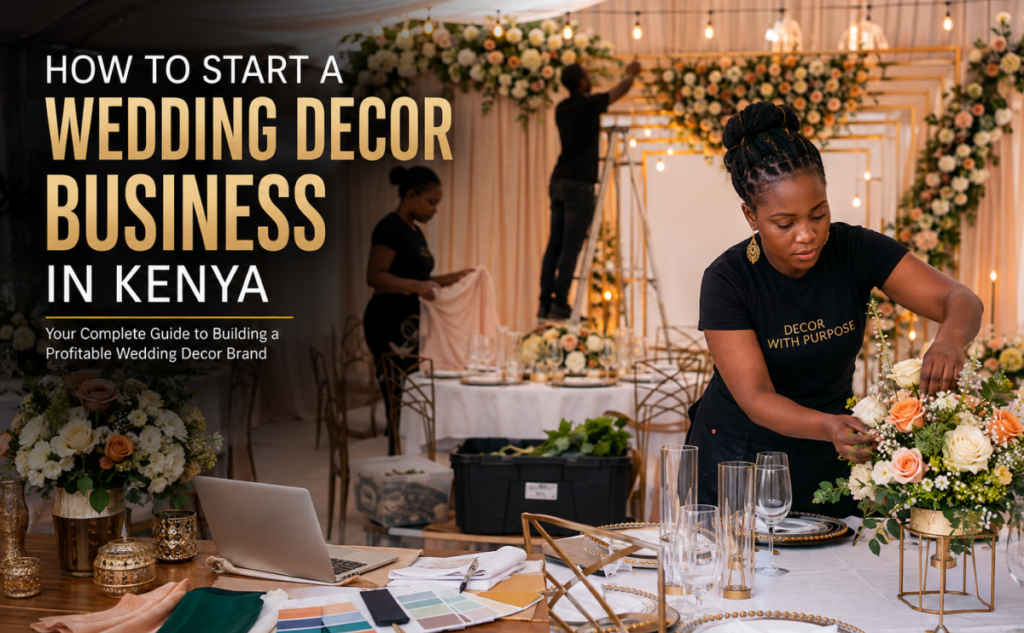
How to Start a Wedding Decor Business in Kenya: A Practical Guide to Building a Profitable Business
Kenya’s wedding industry is creating opportunities for entrepreneurs who can combine creativity with business discipline. As couples increasingly look for weddings that are personal, visually appealing and memorable, wedding décor has become much more than an added detail. The venue, stage, floral arrangements, table settings, lighting, backdrops and overall styling now play an important role in shaping the experience of the day.
For an entrepreneur, this presents an opportunity to build a wedding decor business that goes beyond supplying decorations. A successful wedding decoration business helps couples transform an ordinary venue into a carefully designed environment that reflects their personality, preferences, culture and vision. However, starting a wedding decor business in Kenya requires more than buying flowers and fabrics or creating an Instagram page. It requires a clear target market, a practical business model, reliable suppliers, appropriate equipment, proper pricing, effective marketing and the ability to consistently deliver what a client has paid for.
If you are considering starting a wedding decor business in Kenya, the most important decision is to approach it as a business from the beginning. Creativity may attract your first customer, but professionalism, financial discipline and reliable execution are what can turn that customer into a referral and eventually build a sustainable brand.
Understanding the Wedding Decor Business
At its core, a wedding decor business is an event design and service business. You are not simply selling flowers, fabrics, chairs, backdrops or centrepieces. You are selling the transformation of a space and the convenience of having someone take responsibility for bringing a wedding vision to life.
A couple may approach you with nothing more than a colour palette, a few photographs for inspiration and an idea of the atmosphere they want. Your role is to turn that vision into a practical design that works within their venue, guest numbers, budget and event schedule. Depending on your specialization, this can involve reception décor, ceremony styling, stage and backdrop design, floral arrangements, table styling, draping, aisle decoration, entrance styling, lighting, signage, photo areas and other decorative installations.
This means that the value of a wedding decorator is not determined only by the physical items used at an event. Planning, design, creativity, coordination, transportation, setup, dismantling and customer service are all part of the service. Understanding this distinction is important because it allows you to position your business around the experience you create rather than competing only on the price of decorations.
Choosing Your Target Market
One of the most important decisions you will make when starting a wedding decor business in Kenya is determining who you want to serve. The Kenyan wedding market includes couples with very different budgets, expectations, cultural backgrounds and design preferences. Trying to serve everyone from the beginning can make your brand difficult to position and can also lead to unnecessary investment in equipment that you rarely use.
You could position your business around affordable and elegant weddings, mid-market celebrations, luxury weddings, traditional and cultural weddings, intimate weddings or outdoor and destination events. Each market requires a different approach to design, inventory, pricing and marketing.
For example, a business targeting luxury weddings may need to invest in premium furniture, sophisticated floral installations, custom structures, specialized lighting and a highly detailed client experience. A business targeting budget-conscious couples may instead compete through efficient packages, versatile inventory and strong value for money.
The question to answer before buying your first major piece of equipment is simple: Who do I want my wedding decor business to become known for serving? Once you know your customer, many other business decisions become easier.
Researching the Wedding Decoration Market in Kenya
Before investing your money, spend time understanding the wedding decoration market in the area where you intend to operate. Look at established wedding decorators, event stylists and décor rental companies. Study the services they offer, the types of weddings they showcase, how they present their brands, how customers respond to them and where you believe there are gaps in the market.
The objective is not to copy another decorator. Your objective is to understand the competitive environment and identify an opportunity for differentiation. You may discover, for example, that many businesses provide general wedding decoration but few have a strong focus on modern African styling, affordable luxury, outdoor weddings, traditional ceremonies or intimate premium celebrations.
Market research should also include the venues where your target customers hold weddings. Understanding venue sizes, layouts, restrictions, preferred suppliers, access arrangements and setup requirements can help you design services that are realistic and easier to deliver.
The strongest opportunities often appear where customer demand and an underserved market segment meet.
Creating a Practical Wedding Decor Business Plan
You do not need a complicated business plan to start. You need a practical plan that tells you what you are selling, who you are selling to, where you will operate, what it will cost and how the business will generate profit.
Start by defining your core services. Determine whether you will focus exclusively on wedding décor or whether you will also offer event styling, rentals, floral design or related services. Then identify your target customer and the geographical area you intend to serve.
Your financial plan is equally important. Calculate your expected equipment investment, transportation costs, storage expenses, labour, marketing, administration and other operating costs. You should also understand how much it costs you to deliver an individual wedding.
For example, if a wedding generates KSh 150,000 in revenue but costs KSh 110,000 to deliver, the remaining KSh 40,000 is not automatically your profit. Your business still has to account for wider overhead expenses, marketing, storage, administration and other costs.
This is why successful event businesses understand their numbers before they scale. Knowing your costs, margins and break-even point helps you determine how many events you need to book and whether your pricing model is actually sustainable.
Deciding What Wedding Decor Equipment to Buy
One of the biggest financial decisions for a new wedding decoration business is determining what equipment and inventory to purchase. It is tempting to buy everything you see because a wide inventory appears to create more opportunities. However, purchasing too much too early can tie up your capital in equipment that sits in storage instead of generating revenue.
Your initial inventory should be based on the type of weddings you intend to serve. Depending on your model, you may need backdrops, arches, draping, artificial flowers, vases, centrepieces, candle holders, table linen, decorative stands, signage stands, rugs, lighting and other styling equipment.
The important question is not simply whether an item looks attractive. Ask how frequently you are likely to use it, whether it can work across multiple wedding themes, how much storage it requires and how easily it can be transported. Most importantly, consider how the item contributes to revenue.
Your inventory should be treated as a business asset. The objective is to build a collection of versatile items that can be used repeatedly across different events and design concepts.
Should You Buy or Rent Wedding Decor Equipment?
You do not have to own every item you use at a wedding. In fact, renting can be a practical way for a new business to offer a wider range of décor without making a large upfront investment.
Buying equipment gives you greater control and can reduce rental costs over time, but it also requires capital, storage, maintenance and transportation. Renting allows you to remain flexible, particularly when a client requests a specialized item that you do not use frequently.
For many new wedding decor businesses, a hybrid model can make sense. Own the items you use regularly and rent specialized or expensive equipment when necessary. As your bookings increase, you can identify which rental items are used frequently enough to justify purchasing them.
This approach allows the business to grow its inventory based on actual customer demand rather than assumptions.
Building Reliable Supplier Relationships
Your wedding decoration business depends heavily on its supplier network. Flowers, fabrics, furniture, lighting, printing, signage, balloons, props and other event materials all need to be available when promised.
A wedding is different from an ordinary retail transaction because there is usually no opportunity to postpone the event. If an important supplier fails to deliver on the morning of a wedding, your business is the one facing the client.
For that reason, build relationships with multiple reliable suppliers rather than depending entirely on one source. Keep records of pricing, availability, lead times, quality, payment arrangements and delivery terms. Over time, consistent purchasing can also help you negotiate better supplier relationships.
Your suppliers may not appear in front of your customers, but their reliability directly affects your reputation.
Creating Wedding Decoration Packages
Clear wedding decoration packages can make your services easier for customers to understand and easier for your business to sell. Instead of telling potential clients that you provide wedding decoration, give them structured options that communicate what they can expect.
An entry-level package might focus on essential ceremony and reception styling. A classic package could provide a more comprehensive venue transformation, while a premium package could include enhanced floral arrangements, lighting, custom installations and more detailed styling. Clients looking for a completely personalized concept can then be offered a bespoke service.
The packages do not need to be rigid. They should provide a starting point for the conversation while allowing you to customize the service according to the client’s venue, guest numbers, design preferences and budget.
The objective is to make it easy for a potential customer to understand what you offer, what is included and why different service levels have different prices.
How to Price Wedding Decoration Services in Kenya
Pricing is one of the areas where creative businesses often struggle. Many new decorators calculate the cost of materials and then add a small markup. While this may produce a price that looks attractive to the customer, it can leave the business without enough money to cover its actual operating costs.
A sustainable wedding decor price should account for the full cost of delivering the service. This includes materials, labour, transportation, setup, dismantling, equipment, storage, maintenance, wastage, administration, marketing, general overhead and profit.
You should also distinguish between standard services and custom work. A standard backdrop that can be assembled quickly is not equivalent to a custom installation that requires additional materials, labour and design time.
Your quotation should therefore communicate value rather than simply present a number. When customers understand what they are paying for, it becomes easier to have a professional conversation about their budget and priorities.
The goal is not to become the cheapest wedding decorator in the market. The goal is to create a pricing structure that allows you to deliver quality service while keeping the business financially healthy.
Using Contracts to Protect the Business
Professional wedding decorators should not depend solely on WhatsApp messages or verbal agreements. A written contract creates clarity for both the client and the service provider.
Your agreement should clearly explain the event date, venue, services included, setup and dismantling arrangements, payment schedule, deposit requirements, cancellation terms, design changes, transportation, additional services and the treatment of rented items that are lost or damaged.
A contract also provides a professional framework for managing unexpected situations. Weddings can involve changes in guest numbers, venue arrangements, weather conditions, timing and client preferences. Clear terms help both sides understand their responsibilities before the event begins.
Beyond legal protection, a professional contract sends an important message: your wedding decor company is a serious service business.
Building a Wedding Decor Portfolio
One of the biggest challenges for a new wedding decorator is proving what you can do before you have a long list of clients. The solution is to build a portfolio intentionally.
You do not have to wait for your tenth wedding to start showing your work. You can create styled setups using your initial inventory and photograph them professionally. Develop different concepts that reflect the type of customer you want to attract, such as a modern minimalist wedding, a classic white wedding, a romantic floral design, a traditional African-inspired setup or an outdoor garden reception.
Your portfolio should demonstrate more than beautiful finished photographs. Show the transformation from an empty or unfinished venue to the completed design. Include close-up details as well as wider venue images so potential customers can understand both your creativity and your ability to execute an entire space.
Your portfolio becomes one of your most important sales tools because wedding clients often make decisions visually.
Marketing a Wedding Decor Business in Kenya
Marketing a wedding decoration business requires more than posting attractive photographs. Your marketing should communicate what you do, who you serve, where you operate and why customers should trust you.
Social media platforms can be powerful because wedding décor is highly visual. Use your channels to showcase venue transformations, behind-the-scenes setup, design concepts, client testimonials, colour combinations, table styling, floral arrangements and educational content.
Video is particularly useful because it can show the transformation of a space in a way that a single photograph cannot. A short video showing an empty venue becoming a finished reception can communicate your value within seconds.
At the same time, remember that social media should not be your entire marketing strategy. Platforms can change their algorithms, reach can fluctuate and your audience does not necessarily own the relationship with your business.
A professional website, search visibility, referrals, partnerships and business listings can provide additional channels for generating enquiries.
Using SEO to Attract Wedding Clients
Search engine optimization can become a valuable long-term marketing channel for a wedding decor business in Kenya. Couples often search online while researching vendors, prices, ideas and venues before making a decision.
They may search for phrases such as “wedding decorators in Nairobi,” “wedding decoration services in Kenya,” “affordable wedding decorators,” “luxury wedding decor,” or “wedding decoration prices in Kenya.”
Your website should therefore provide useful information that answers these questions naturally. Instead of filling pages with repeated keywords, create genuinely useful content around the problems and decisions your customers are trying to solve.
Articles such as “How Much Does Wedding Decoration Cost in Kenya?”, “How to Choose a Wedding Decorator in Kenya,” and “Wedding Decoration Ideas for a Kenyan Wedding” can attract people at different stages of the buying journey.
This approach allows your content to become a marketing asset that continues working even when you are not actively posting on social media.
Building Relationships Across the Wedding Industry
A wedding decor business operates within a much larger ecosystem. Wedding planners, venues, photographers, videographers, caterers, DJs, MCs, bridal fashion businesses, makeup artists, florists and event rental companies are all serving customers who may eventually need your services.
Building relationships with these professionals can create valuable referral opportunities. A wedding photographer may know a couple looking for a decorator. A venue may recommend preferred suppliers. A wedding planner may require a reliable décor partner for several events.
The key is to build relationships based on professionalism rather than simply asking other businesses for referrals. When other professionals know that you communicate well, arrive on time and deliver what you promised, they have a reason to recommend you.
In the wedding industry, reputation is a business asset.
Using ShereheHub to Build Business Visibility
As the event industry becomes increasingly digital, wedding service providers need more than social media visibility. Customers need practical ways to discover businesses, understand their services and make informed decisions.
This is one of the opportunities ShereheHub is designed to address. As an event services marketplace, ShereheHub brings together businesses across categories such as décor, catering, entertainment, rentals, media, AV and production, beauty and grooming, fashion and attire, logistics and venues.
For a wedding decor business, being listed on a platform such as ShereheHub creates another point of discovery where potential customers can find relevant services. A professional listing can communicate the business’s location, services, specialties and portfolio while making it easier for customers to move from discovery to connection.
The broader opportunity is simple: make it easier for the right customer to find your business when they are already looking for the service you provide.
Measuring the Performance of Your Wedding Decor Business
Creativity should drive the experience, but numbers should drive business decisions. From the beginning, track where your enquiries come from, how many quotations you send, how many become bookings and the average value of each booking.
You should also understand the actual cost and profitability of every event. A wedding that generates significant revenue is not necessarily a successful event financially if the costs were poorly controlled.
After every event, review what happened. Determine which services were most profitable, which equipment was used most frequently, where additional costs appeared and what could have been done more efficiently.
This information becomes increasingly valuable as your business grows. Instead of making decisions based on assumptions, you can use actual customer and financial data to determine where to invest.
Starting Small and Scaling Strategically
You do not need a large warehouse full of wedding decorations to start a successful business. In many cases, starting with a focused service offering and a manageable inventory is more sensible than making a large investment before you have established demand.
Your first objective should be to build a strong foundation. Develop a clear brand, create a professional portfolio, establish reliable supplier relationships, deliver your first events well and collect genuine customer testimonials.
As bookings increase, reinvest into the business. You can gradually expand your inventory, add staff, acquire transportation, improve your marketing and introduce additional services.
Your business may begin with wedding décor and eventually expand into event styling, rentals, floral design, corporate events and full event production.
Growth should be intentional. Becoming larger is not the only measure of success. A strong event business should become more profitable, more efficient, more reliable and more recognizable as it grows.
Expanding Beyond Weddings
Although weddings can be an important market for a décor company, relying entirely on weddings may limit your revenue opportunities. The same equipment, skills and creative capabilities can often be used for other types of events.
Corporate functions, birthdays, graduations, baby showers, engagement parties, cultural celebrations, anniversaries, private dinners and product launches can all require professional event styling.
Expanding into related event categories can help you make better use of your inventory and reduce dependence on a single customer segment.
The long-term opportunity may therefore be larger than building a wedding decoration company. You could eventually build a broader event design and production business.
Building a Business, Not Just a Decoration Service
Starting a wedding decor business in Kenya is ultimately about building a service brand around one of the most important moments in a customer’s life. That responsibility makes professionalism particularly important.
A beautiful design may attract attention, but reliable execution creates trust. Trust creates customer satisfaction. Customer satisfaction creates referrals. Over time, those referrals can become a significant source of new business.
The strongest wedding decoration businesses understand that their competitive advantage is not only their ability to create beautiful spaces. It is their ability to combine creativity with planning, communication, financial discipline, supplier management and dependable execution.
If you are thinking about starting a wedding decor business in Kenya, begin with the customer rather than the equipment. Understand the market you want to serve, develop services around that market, calculate your costs carefully and build a reputation for delivering what you promise.
The opportunity is not simply to decorate weddings.
The opportunity is to build a trusted event services business.
Frequently Asked Questions About Starting a Wedding Decor Business in Kenya
How much does it cost to start a wedding decor business in Kenya?
The cost of starting a wedding decor business in Kenya varies significantly depending on the target market, location, equipment ownership, storage, transportation and range of services. A small business can begin with a focused inventory and use rented equipment for specialized requirements, while a premium wedding decor company may require a considerably larger investment.
Is wedding decor a profitable business in Kenya?
Wedding décor can be a profitable business when it is supported by appropriate pricing, consistent bookings, efficient operations and careful cost management. Profitability depends on the individual business model, customer segment and ability to control the cost of delivering each event.
What equipment do I need to start a wedding decor business?
The equipment required depends on your service offering, but common wedding décor inventory includes backdrops, arches, draping, artificial flowers, vases, centrepieces, decorative stands, table linen, signage and lighting. It is generally more practical to begin with versatile equipment that can be used across multiple wedding styles.
How do I get my first wedding decor clients?
Your first clients can come through personal networks, referrals, social media, styled portfolio shoots, partnerships with wedding professionals, local SEO and event marketplaces. Building relationships with venues, planners, photographers and other wedding suppliers can also create valuable referral opportunities.
How should I price wedding decoration services in Kenya?
Wedding decoration pricing should account for materials, labour, transportation, setup, dismantling, equipment, storage, maintenance, overhead and profit. Avoid setting prices solely by copying competitors because their costs, market positioning and business model may be different from yours.
Can I start a wedding decor business without owning all the equipment?
Yes. Renting equipment can allow a new wedding decorator to provide a broader range of services without making a large initial investment. A hybrid approach, where frequently used items are purchased and specialized equipment is rented, can be an effective way to grow inventory according to actual demand.
How can I market a wedding decoration business in Kenya?
A strong marketing strategy can combine social media, search engine optimization, a professional website, customer referrals, partnerships, testimonials and event marketplaces. Visual content showing completed weddings and venue transformations can be particularly effective because potential customers want to see the quality and style of your work before making a booking.
