
Inside Africa’s Growing Event Industry
- Business Articles
-
Aug 04
-
11 min read
- Share post
The Business Behind Every Celebration
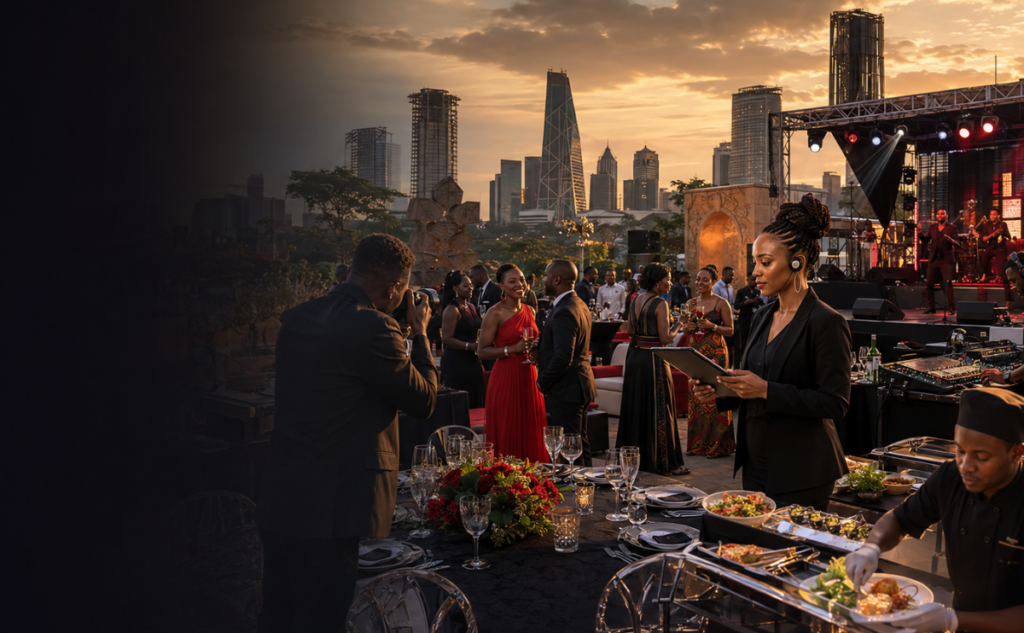
There is something special about the way Africa celebrates. A wedding can bring together an entire family, a graduation can become a community celebration, and a birthday can turn into an evening filled with music, food, laughter and memories. A corporate event can bring together business leaders, employees, partners and customers around a new idea, product or opportunity. What may look like a few hours of celebration on the surface is often the result of weeks or even months of planning, coordination and hard work behind the scenes.
That is where Africa’s growing event industry comes in. Behind almost every successful event is a network of businesses and professionals working together to make the experience possible. Event planners coordinate the details, decorators transform spaces, caterers prepare the food, photographers capture the memories, entertainers create the atmosphere, venues provide the setting, and audiovisual professionals make sure everything comes together. What was once largely informal is gradually developing into a sophisticated and increasingly important business ecosystem.
Africa has always had a strong culture of gathering and celebration. Weddings, traditional ceremonies, religious occasions, graduations, festivals, family gatherings and community events have always been part of everyday life. People have always found reasons to come together. What is changing today is the scale, professionalism and variety of services surrounding these occasions.
A modern African event can involve a surprising number of specialized businesses. A wedding may require a venue, event planner, decorator, caterer, photographer, videographer, DJ, live band, makeup artist, fashion designer, transportation provider and rental company. A corporate conference can require event management, branding, audiovisual production, catering, photography, security and guest management. Each service represents a business opportunity, and when thousands of events take place across the continent, those individual opportunities become a much larger economic ecosystem.
The event industry is also changing because people are no longer satisfied with simply organizing an event. They want an experience. Couples want weddings that reflect their personalities and stories. Families want celebrations that feel meaningful and memorable. Businesses want conferences and product launches that leave an impression on their customers and partners. The question is increasingly moving from “Can you organize the event?” to “Can you create an experience that people will remember?”
This shift is creating exciting opportunities for creative entrepreneurs. A decorator is no longer simply arranging chairs and flowers; they are transforming an ordinary space into an environment that communicates a particular mood and identity. A photographer is not simply taking pictures; they are preserving moments that families may look back on for decades. A caterer is not simply serving food; they are contributing to the overall guest experience. An entertainment provider is not simply playing music; they are helping create the energy and atmosphere of the occasion.
Weddings remain one of the strongest parts of Africa’s event industry. For many families, a wedding is much more than a celebration between two people. It is a meeting of families, cultures and communities. It can involve hundreds of guests, multiple ceremonies and a wide range of professional services. As couples become more interested in personalized celebrations, demand for creative décor, professional photography, destination venues, entertainment, catering, bridal beauty and fashion continues to create opportunities for event businesses.
The African wedding market is also becoming increasingly connected to the global diaspora. A couple may live in Canada, the United States, the United Kingdom or another part of the world while planning a wedding in Kenya, Ghana, Nigeria, South Africa, Tanzania or another African destination. Their families may be spread across several countries, yet they still want to celebrate important milestones at home. This creates a growing market for event professionals who can serve clients remotely and provide reliable services on the ground.
For someone planning a wedding from thousands of kilometres away, trust becomes particularly important. They need to know that the venue will be ready, the decorator will deliver what was agreed, the caterer will arrive on time and the photographer will capture the moments that matter. They cannot always visit every business personally or inspect every service before making a booking. This is why professionalism, communication, transparency and reliability are becoming increasingly valuable in the African event industry.
The opportunity, however, extends far beyond weddings. Africa’s growing business environment is creating demand for corporate events of all kinds. Companies are organizing conferences, product launches, exhibitions, networking events, award ceremonies, team-building activities and corporate celebrations. Nonprofit organizations are holding workshops and fundraising events, universities are organizing graduations and alumni gatherings, while brands are creating activations designed to connect directly with consumers.
Corporate events can also create a different kind of opportunity for service providers because they can lead to repeat business. A company may need event services several times a year rather than only once. A venue may host regular conferences, a caterer may develop a relationship with a corporate client, and an audiovisual company may become the preferred provider for a particular organization. For entrepreneurs looking to build sustainable event businesses, these longer-term relationships can be extremely valuable.
One of the most exciting developments is the emergence of a new generation of event entrepreneurs across Africa. Many people are turning skills they once considered hobbies into professional businesses. Someone who starts decorating birthday parties for friends can eventually build a décor company. A young photographer can develop a successful wedding and corporate photography business. A talented DJ can create an entertainment brand. A home baker can grow into a professional catering or cake business.
The same is true for makeup artists, fashion designers, florists, videographers, content creators and event planners. The event industry provides opportunities for people with different skills, backgrounds and levels of investment. For many entrepreneurs, the journey can begin with one customer, one successful event and a recommendation that leads to the next opportunity.
Technology is also changing how customers discover event services. Traditionally, finding a reliable event vendor depended heavily on personal recommendations. Someone planning a wedding might ask a friend who had recently been married, search through social media pages or collect phone numbers from family members. While referrals remain important, customers are increasingly turning to the internet to research businesses, view portfolios, compare services and make inquiries.
This shift is creating opportunities for digital event marketplaces and online platforms that bring service providers and customers together. A customer searching for a photographer, decorator, caterer, venue or entertainment provider can increasingly discover businesses without relying entirely on personal networks. For service providers, digital visibility can mean reaching customers outside their immediate neighbourhood, city or even country.
This is particularly important for Africa’s growing diaspora market. Someone living abroad may not personally know an event decorator or caterer in their hometown. They may have family members who can make recommendations, but they still want to research the provider themselves. An online platform that makes event services easier to discover, compare and contact can help reduce some of the uncertainty involved in planning an event from another country.
Social media has added another dimension to the event industry. An event no longer ends when the last guest leaves. Photographs and videos can continue circulating online for days, weeks or even years. A beautifully decorated wedding can generate social media content. A corporate event can create professional material for a company’s digital channels. A product launch can reach people who were never physically present.
This has created additional opportunities for photographers, videographers, drone specialists, content creators and social media professionals. The event itself has become a source of content, and the quality of that content can influence how people remember the occasion or perceive the brand behind it. For businesses, an event is increasingly both a physical experience and a digital story.
Africa’s cultural diversity gives its event industry another significant advantage. Music, fashion, food, art, traditions and storytelling are deeply connected to celebrations across the continent. Every country and community brings its own identity to the way people gather and celebrate. This creates opportunities for event businesses to combine modern event trends with authentic African culture.
A wedding can combine traditional attire with contemporary fashion. A corporate event can incorporate African cuisine, music or design. A destination celebration can combine an event with tourism and cultural experiences. For entrepreneurs, this means there is an opportunity to offer more than a standard service. They can create experiences that are rooted in African identity while still meeting modern expectations for quality and professionalism.
Despite this potential, the African event industry still faces challenges. Customers can struggle to identify reliable service providers, compare prices and determine whether a business can deliver what it promises. Pricing may not always be transparent, communication can break down, and service quality can vary significantly from one provider to another. Many small businesses have excellent skills but limited digital visibility or formal business processes.
For customers, these challenges can create unnecessary stress. Planning an important event is already emotionally demanding. When someone is preparing for a wedding, graduation or major family celebration, they do not want to spend every day chasing vendors, confirming bookings or worrying about whether a supplier will appear. They want to enjoy the experience and look forward to the moment itself.
This is why professionalism is likely to become one of the most important differentiators in the African event industry. Creativity may attract a customer, but reliability can earn their trust. A strong portfolio matters, but so does clear communication. Competitive pricing is important, but so is delivering what was promised. Businesses that combine creativity with organization, transparency and dependable service will be better positioned to build lasting relationships.
The opportunity is therefore much bigger than event planning alone. Africa’s event ecosystem includes catering, décor, entertainment, photography, videography, fashion, beauty, venues, rentals, logistics, audiovisual production and technology. There are opportunities for freelancers, small businesses, established companies and technology entrepreneurs. Each part of the ecosystem supports another, creating a network of businesses that can grow together.
The next stage of Africa’s event industry is likely to be more digital, connected and professional. Customers will increasingly discover event services online, service providers will use digital portfolios to showcase their work, and booking and payment processes will become easier. People planning events from outside the country will have more ways to connect with local businesses, while service providers will have opportunities to reach customers far beyond their immediate communities.
Yet, despite all the technology and business opportunities, the fundamental reason behind the industry will remain the same. People will still want to gather with the people they love. They will still want to celebrate weddings, graduations, birthdays, cultural occasions and business milestones. They will still want good food, beautiful surroundings, music, laughter and photographs that preserve the moment.
Behind every event is ultimately a human story. There is a couple beginning a new chapter together, a family celebrating years of hard work, a business launching something it believes in, or an entrepreneur trying to turn a creative skill into a sustainable livelihood. These are not simply transactions. They are moments that matter.
That is what makes Africa’s event industry so powerful. It sits at the intersection of culture, creativity, entrepreneurship and human connection. It creates opportunities for businesses while helping people celebrate some of the most meaningful moments of their lives.
Africa has always known how to celebrate. What is changing is the business infrastructure around those celebrations. As cities grow, businesses expand, technology becomes more accessible and the African diaspora remains connected to home, the demand for professional event services will continue to evolve.
The next generation of event businesses will not only be creative. They will be organized, digitally visible, customer-focused and dependable. For entrepreneurs, there is room to build. For service providers, there is room to grow. For customers, there is room to expect better experiences.
And for platforms bringing customers and event professionals together, there is an even bigger opportunity: making the entire journey easier, from discovering the right service provider to creating an experience that people will remember long after the event is over.
Africa has never needed a reason to celebrate. Now, it is building a bigger, more connected and more professional industry around the moments that bring people together.
